Uncategorized – Page 6 – Building Kidz School

Category: Uncategorized

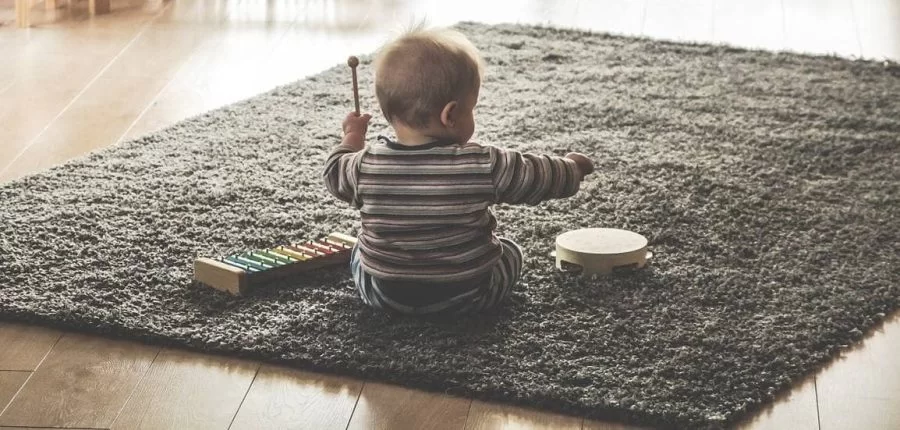
  • Music in Preschool Education Has Been Proven to Accelerate Learning

    As children, nearly all of us learned our ABC’s through song. Some of us still need to sing the song when going through a dictionary or alphabetizing a bookshelf. It is music that taught us that simple yet necessary tool.
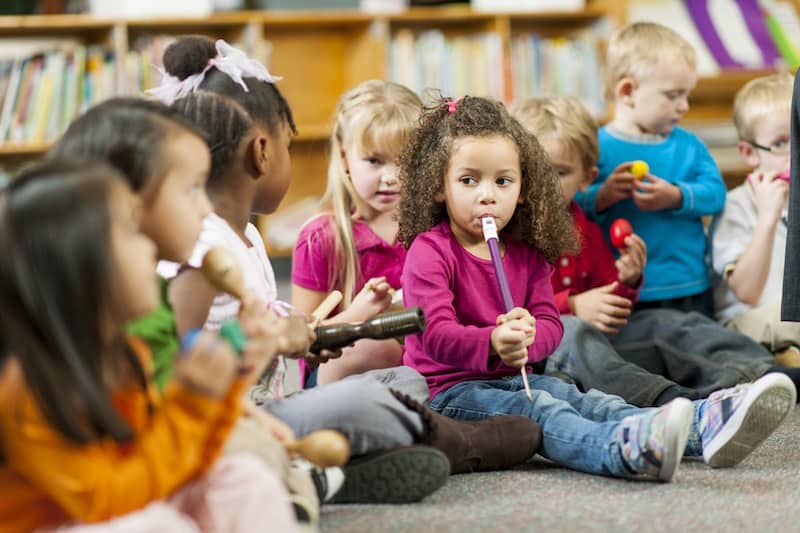
    When talking about learning and growth, music does much more than might be realized. So how does music in preschool education help? It is has been shown through multiple studies that music has a positive effect on children’s mental growth, from improved test scores to increased spatial-temporal skills. These skills have been shown to improve children’s problem-solving skills, according to the Performing Arts Medicine Association. This is because the spatial-temporal skills work hand-in-hand when solving the “multistep problems” that arise in math, engineering, and architecture. (pbs.org)

    Music has also been shown to be a great aid in language development among young children. Mary Luehrisen, executive director of the National Association of Music Merchants (NAMM) Foundation, explains that “Growing up in a musically rich environment is often advantageous for children’s language development”. And this is for children as young as two! From toddlers to preschoolers, music will help them increase their language and communication skills. She goes on to explain that the music capacities needed to improve language development need to be routinely practiced. At Building Kidz, this is why we incorporate music into our monthly curriculum and daily schedules.

    Music in the Preschool Education at Building Kidz Schools

    At Building Kidz, music is a central part of what we do. Teachers will be singing in our infant room while some of the little ones coo along. Our toddlers will be dancing and singing as they sing about the color blue, or the shape of a table. The preschool classroom learns songs to help them remember what sound an “s” makes, or how to spell the word “dog.”

    On top of this, every Building Kidz location has a professional music teacher come into each classroom every week which enhances the music education in the preschools. These qualified and caring teachers help children sing, introduce them to new instruments, and prepare them for one of our bi-annual performances. Learn more about  performing arts including music here. All of this is included in the base tuition our parents pay, with no additional cost.

    Learn more about Building Kidz and our Programs here and then find a location near you to schedule a tour.
  • Literacy Critical Piece of Quality Daycare

    We are all aware that reading is crucial to being successful in today’s world. So much of our personal and work communications are done through the written word-texts, emails, memos. And I think we can all agree that we want our children to become skilled readers and writers so that they may have successful futures. And for those of us who have children in daycare and preschool, we want to be sure they gain the skills they need when not in our care.

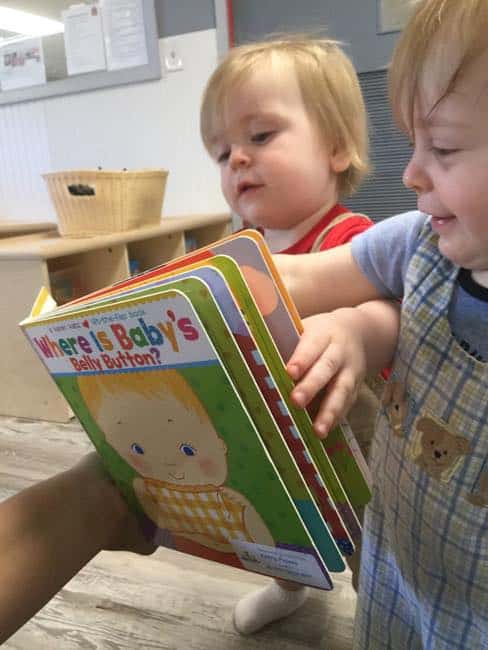
    When we talk about literacy in daycare, we don’t mean teaching infants and toddlers to read. Rather, it refers to the practice of providing infants and toddlers experiences letters, words, and books. In an article about early literacy, the American Library Association states, “Literacy development begins at birth and is closely linked to a baby’s earliest experiences with books and stories. Babies learn language through social literacy experiences” (ala.org). These experiences include being read to as often as possible and allowing them to hold books in their hands (remember to use books that are safe for babies to chew on!).

    Literary Experiences at Building Kidz Preschools

    At Building Kidz, we offer infant care, toddler care, and pre-kindergarten programs. Each and every class, every day, provides meaningful literacy experiences in our daycare centers. Each week, the toddler care and preschool classes focus on a specific letter. They hold the letter, practice writing the letter, and make crafts with the letter. We let them experience each letter through multiple activities so that they can begin to recognize the letter. They also begin to memorize words that start with that letter, further preparing them for future reading success.

    We recently heard from a parent the success she has seen in her child since he started the preschool program at Building Kidz. “It’s exciting! He comes home now, telling me that frog starts with ‘f’ and snake starts with ‘s’. Him and I have start playing a game where we pick a letter and come up with as many words as we can that start with that letter. It’s fun and exciting, and I think he’ll really be ready for kindergarten.”

    We love hearing that our children and families find such success, and it is our commitment to all of our families that each child will find this kind of success. Learn more about our programs here. And to find a location near you, click here.

  • Childhood Nutrition is Crucial Part of Preschool and Daycare

    Whether at home, daycare, or preschool is crucial that children have a healthy and balanced diet. “Whether you have a toddler or a teen, nutrition is important to his or her physical and mental development” (healthychildren.org). Not only does a healthy diet help children grow physically, it is a significant part of their mental development. As parents and educators, we often look at only the obvious signs of healthy mental development. Are they crawling and walking? Making sounds, words, then forming sentences? These are all great questions to ask ourselves. Studies have shown, though, that a proper diet at home and in preschool benefits the development of these skills and many more.

    According to urbanchildinsitute.org, “A proper balance of nutrients…is critical for normal brain development.

    Shortages of nutrients can impair cognitive and motor development, and these effects are often irreversible.” As we all work to feed our children and students a balanced diet, we are helping them develop both body and mind”.

    Diet at Building Kidz Preschool

    Every Building Kidz Preschool has a kitchen on site. We provide a balanced breakfast, lunch, and snack for each of our students. The snacks and meals are planned ahead of time so that we can ensure we have fresh ingredients on hand. Fresh fruits and vegetables, as well as healthy grains and dairies, are daily staples at Building Kidz. Healthy nutrition is just as important to us as academic and emotional well-being. It is just another way we help develop the whole child.

    To learn more about Building Kidz or to find a location near you, click here.

  • Preschool Checklist

    Each family has different priorities when they chose an early education environment for their children, and also puts different weight on those priorities. After hearing many parents wishing for a “preschool guide” or a “preschool checklist”, we’ve decided to put our years of early childhood education to use and provide one!

    What makes a good preschool and what makes a good fit for your family are two different things. You won’t find things like “great staff”, “a good curriculum”, or “a safe environment” on this checklist. Those are all very important, and if you are wondering how to select a preschool, be sure to check out our 5 steps to selecting the right preschool. Questions regarding the safety and quality of the childcare center are things you will learn during your investigation; think of this list as a pre-investigation list. It is designed for you to get a better grasp on what’s important to you, individually, outside of the quality of care.

    You can use this list to narrow your options down when you work through our 5 steps to selecting the right preschool.

    How to use this checklist

    Start with a list of preschools in your area (here is a list of the Building Kidz schools). Next, find out if they will have an opening for your child in time for your target enrollment. If they do, you can use this checklist to quickly determine if they should be on your consideration list.

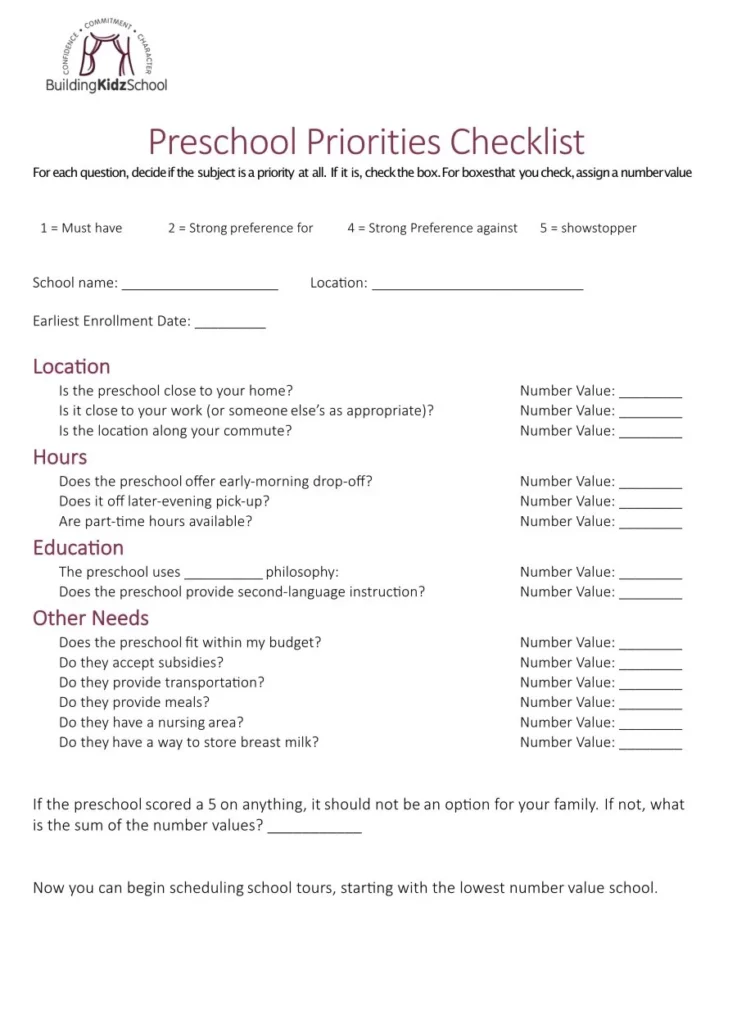
    Feel free to download a printable checklist of this document or you can get an editable PDF here, or just grab a pen and paper and jot down your answers! For each question, decide if the subject is a priority at all. If it is, check the box. For boxes that you check, assign a number value:

    1 = Must have
    2 = Strong preference for
    4 = Strong Preference against
    5 = showstopper

    Yes, we skipped “3”. Those are the priorities you don’t check!

    So, without further ado, let’s get started.

    Preschool Priorities Checklist

    For each question, decide if the subject is a priority at all. If it is, check the box. For boxes that you check, assign a number value.

    School name: _________________________      Location: ________________________________

    Earliest Enrollment Date: _________

    Location

     Is the preschool close to your home? Number Value: ________
     Is it close to your work (or someone else’s as appropriate)? Number Value: ________
     Is the location along your commute? Number Value: ________

    Hours

     Does the preschool offer early-morning drop-off? Number Value: ________
     Does it off later-evening pick-up? Number Value: ________
     Are part-time hours available? Number Value: ________

    Education

     The preschool uses __________ philosophy: Number Value: ________
     Does the preschool provide second-language instruction? Number Value: ________

    Other Needs

     Does the preschool fit within my budget? Number Value: ________
     Do they accept subsidies? Number Value: ________
     Do they provide transportation? Number Value: ________
     Do they provide meals? Number Value: ________
     Do they have a nursing area? Number Value: ________
     Do they have a way to store breast milk? Number Value: ________

    Should this school go on your list? If there are any “5”s, you have effectively eliminated this preschool as a consideration. If not, then the school is a contender! Add up the numbers, and the lower the sum the closer to the top of your list the school should be. Now you can begin scheduling school tours, starting with the lowest number value school.

  • The Five-Step Guide to Picking a Preschool

    The early years of your child’s care and education are some of the most formative. If you are a new parent and are trying to educate yourself on what early childhood education, the sheer amount of information can be overwhelming! So the idea that there can be a simple, five-step guide to picking a preschool might seem a little far-fetched.

    We can’t simplify this completely for you. We do want you to know, however, that many preschool programs will benefit your child. Sure, some philosophies of education and methods of teaching are better than others (naturally, we are partial to the Whole Child Philosophy)  but your child will benefit greatly from any quality education program. We have prepared this simple guide to help you hone in on the right child education center for you.

    1. Get started now

    Did you know that some preschools have waiting list that require expectant parents to register before birth to reserve a spot for their child? Do a scan of the preschools in your area (just google “preschool near me” or “childcare near me”), call a few schools, and ask about wait lists. This step will let you know if you can make a leisurely search of if you have to make a decision fast.

    2. Determine your priorities

    No one can tell you what is most important for you and your child. Each parent, child, relationship, and life situation is different, so each priority list will be as well.  If you are struggling to clarify your priorities, check out our preschool priority checklist.

    3. Educate yourself on the ECE industry

    You don’t have to go back to school but educate yourself on early childhood education. Research philosophies like Whole Child Education, The Montessori Method, or the Waldorf Approach, and learn what resonates with you. Make sure you know the difference between child-led and child-centered preschools, what a co-operative preschool is, what faith-based curriculum means, and what cognitive development really is. Research Connections has a great resource for understanding industry terms.

    4. Determine your budget

    Our children are our most precious possession, and we all wish we didn’t have to consider the financial cost when talking about education, but of course we do. Determine both your target and max budget, and what would make you willing to exceed your target. Pricing for Preschool pricing will be affected by the local market, the quality of child care offered at the preschool, as well as specialized classes. If your work and home are not in the same basic area, make sure you check prices in both, you may find a significant difference!

    5. Make a decision

    Once you know your priorities, your budget, and understand the terms you are likely to encounter, its time to start touring schools!  Visit as many locations as you can that offer the age-appropriate program(s) that you are looking for.  Also, make sure you take notes! As you are thinking back over your tours, you will likely not be able to remember every nuance that you learned from each school. After your tour, jot the important things that you learned on the tour down before you even drive away.

    Choosing your child’s preschool isn’t going to be easy, but it can be fairly simple. If you use our Five-step Guide to Picking a Preschool, you will know that you made a systematic and well-informed decision for your little one’s future!