Uncategorized – Page 4 – Building Kidz School

Category: Uncategorized

  • SEL in Early Childhood Education

    Social and Emotional Learning

    Educating students of all ages in math, science, language, and the arts has long been the main focus of school systems. While these are crucial for students to be successful in their education and careers, it does not prepare them to be successful in future relationships. This is where the new idea of social and emotional learning (SEL) comes in.
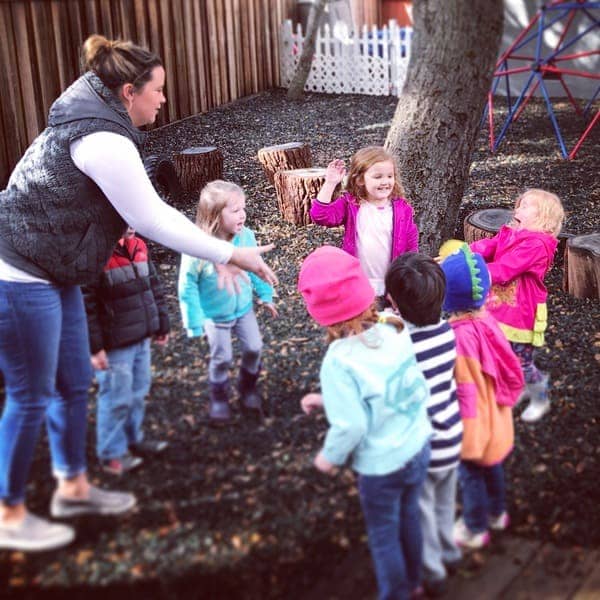
    The focus of social and emotional learning is simple: it teaches children the importance of dealing with emotions in healthy ways. It gives them the opportunity to share their emotions (positive or negative) with teachers and peers in a safe environment. As children do this, they learn to identify each of their emotions, and then how to handle them in healthy and socially acceptable ways. About a year ago, this idea was discussed in an article found at the Huffington Post.

    The article references multiple studies conducted on the topic of SEL. It says, “its benefits continue to aid students beyond the classroom for years to come…SEL programs have been shown to reduce bullying and other forms of social cruelty by increasing self-awareness, empathy, and understanding among students.” The conclusion, then, is that giving student SEL experiences can help reduce future risky, cruel, and dangerous behaviors.  

    SEL Within a Building Kidz Curriculum

    What sets Building Kidz apart from other preschools is that we specialize in integrating performing arts and academics to educate the Whole Child. And it is not possible to truly educate the Whole Child without providing social and emotional learning experiences. At Building Kidz, we have multiple ways of doing this.

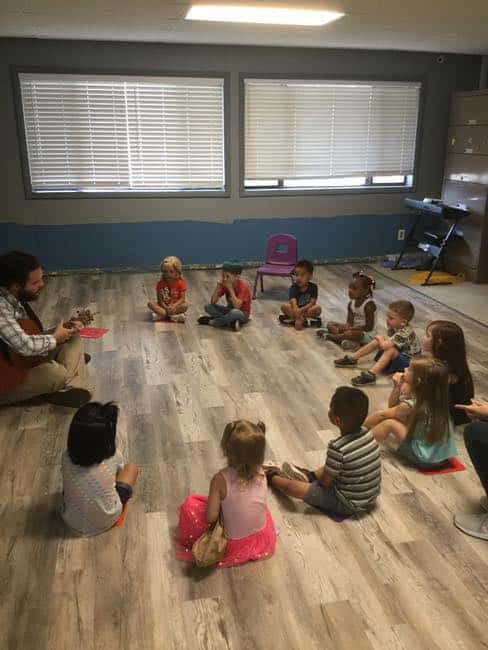
    With younger children, we start by helping children learn to identify the various emotions. What does frustrated look like? What does sad feel like? As they grow older, we are able to integrate performing arts techniques with social and emotional learning. Our teachers help the children learn how to identify and work through emotions by role playing. With a teacher’s guidance and input, the children will face situations that may make them feel sad, happy, confused, or frustrated. Learning how to handle and communicate these emotions in a safe environment will help each child be a more well-rounded person in the future.

    And that is our goal at Building Kidz: to give children the experiences they need to be successful in all aspects of their lives. 

  • Nutrition in Early Childhood Development

    The Importance of Childhood Nutrition

    We all agree that our children’s emotional and intellectual health are crucial to their current and future success. We also agree that the right foods play are large role in their physical health and growth. But how does nutrition affect early childhood development as a whole?

    Studies have shown that nutrition, in fact, plays a large role in a child’s brain development. According to urbanchildinsitute.org, “A proper balance of nutrients…is critical for normal brain development. Shortages of nutrients…can impair cognitive and motor development, and these effects are often irreversible. Similarly, there is growing evidence that DHA, an essential fatty acid, is a key component of the intensive production of synapses that makes the first years of life a critical period of learning and development. Many other nutrients…have been linked specifically to early brain functioning.” The studies into nutrients and brain development are extensive and often complicated. When it comes down to it, though, the conclusion is simple: when children are provided with a balanced, nutrient-rich diet their brains are given opportunity to fully develop.

    Nutrition at Building Kidz

    The significance of nutrition in early childhood development has also been noted by many preschool teachers. One preschool teacher put it this way:  “If they are not eating the right foods, they are not going to function right” (thestkittsnevisobserver.com). At Building Kidz, we agree with this statement. So, we make it a part of our daily program to feed each and every child food that will allow to function at their full potential.

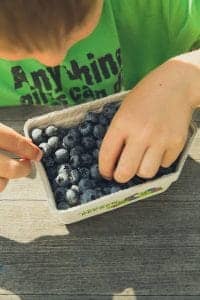
    Each day at our campuses equipped with a kitchen, we provide breakfast, lunch, and two snacks for each child. The snacks and meals are planned ahead of time so that we can ensure we have fresh ingredients on hand. Fresh fruits and vegetables, as well as healthy grains and dairies, are daily staples at Building Kidz. Healthy nutrition is just as important to us as academic and emotional well-being. It is just another way we help develop the whole child.

  • Keep the Beat in ECE

    Why Teach Children to Keep a Beat?

    There have been multiple studies that show how music benefits children’s social, emotional, and intellectual growth. Recent studies, though, have shown that kids gain similar skills by learning to keep a beat. A study found in The Journal of Neuroscience addresses this exact idea.

    “Accurate beat-keeping’s implications for reading and language skills simply make sense, according to the co-authors. ‘Rhythm is an integral part of both music and language,’ Kraus says. ‘And the rhythm of spoken language is a crucial cue to understanding’” (medicalxpress.com).

    I have seen this as I have watched and heard my two-year-old talk more and more. Sometimes he will talk fast, and at intervals slow down to catch his breath. It makes understanding him more difficult. When he tries to sing along with songs, though, he follows the beat and takes his time when pronouncing his words. And this is how learning to keep a beat can be a great aid in language learning.

    Learning to keep to keep a beat also helps to grow a child’s social skills. “Many physical activities have a beat ­– walking, jumping, running, hopping, skipping, kicking and so on. Mastering these skills enables your child to play more sophisticated games with other children, which gives them opportunities to make friends, which in turn encourages them to develop social skills and increases their enjoyment of life” (activebabiessmartkids.com). All of this, from keeping a beat? Yet it does make sense. Beats make up so much of our movements, whether we consciously recognize it or not. And, since a large part of socializing is communication, learning to keep a beat helps children communicate better with one another.

    Keeping the Beat at Building Kidz

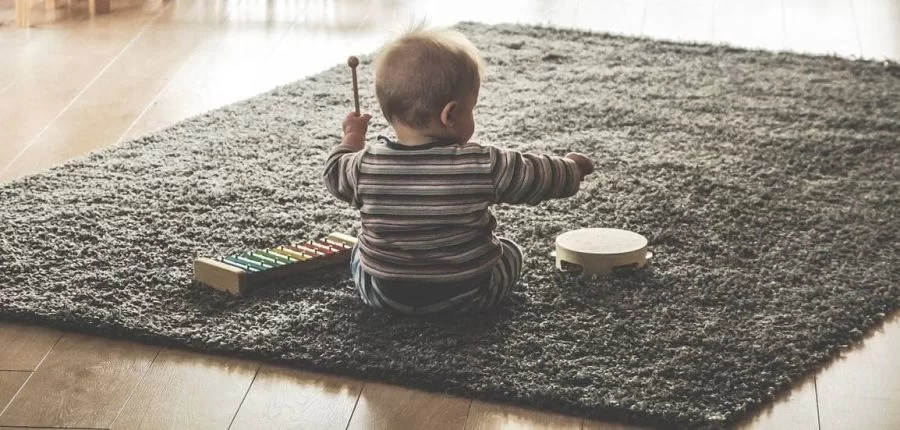
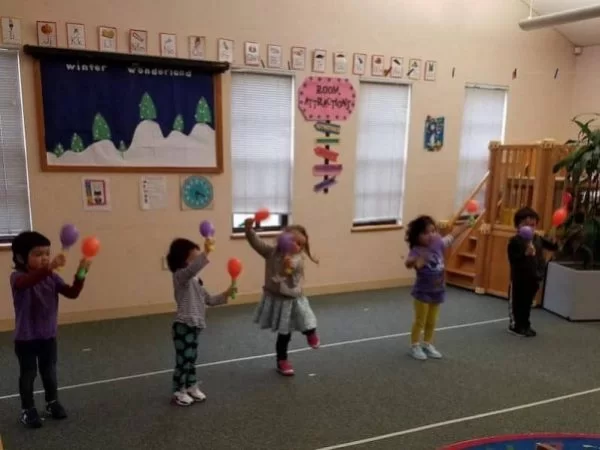
    As we’ve discussed in previous blogs, music is crucial to the Building Kidz curriculum and atmosphere. We hold fast to the idea that music, and beats, are great assets in developing the whole child.  We take studies like the above ones seriously, and do our best to implement them daily in our classrooms. We have weekly music classes from qualified teachers (at no extra cost). And, music is worked into our teachers’ lesson plans each and every day. Children use rhythm sticks, tambourines, and their hands as they learn the significant skill of keeping a beat.

  • The Importance of Routine in ECE

    Does Routine in ECE Really Matter?

    Providing children with a consistent routine gives them more opportunity to be successful. According to zerotothree.org, routines have multiple benefits: routines help children learn self-control, reduce power struggles, provide a sense of safety for children, improve social skills, and help when transitioning between activities. A large part of this is because children, like the rest of us, handle change best if it is expected and occurs in the context of a familiar routine” (ahaparenting.com).

    When children know what is coming and what to expect after each activity, and this creates far less struggle during transition times. They don’t have fears or worries about the unknown, and thus feel safe in a place that has a consistent routine. And when children feel safe, they are far more able to grow socially, emotionally, and academically.

    Routines at Building Kidz

    At Building Kidz, each location has a set routine that our children can rely on. We do this because “When adults provide environments that feel safe, children learn that they can trust others to take care of them and meet their needs, so they become free to relax and explore their world” (education.com). Being committed to developing the Whole Child, routines have become an important part of the Building Kidz curriculum.

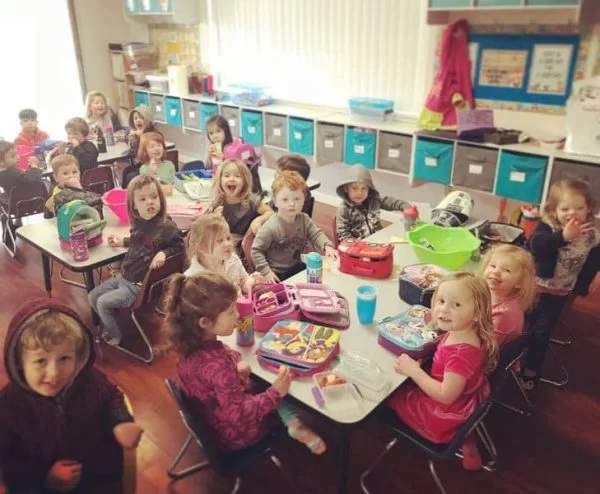
    These schedules and routines do not hamper their creativity; in fact, it gives them the freedom and security to be more creative. Our children know what to expect on any given day. When they come in, they know what activity starts the day (Circle time, welcome song, etc). They know when they have their next snack break, when their dance teacher is coming, and when they have free time. The team at Building Kidz has seen first hand how these routines have allowed each child to blossom and be better prepared for their future.

  • The Significance of the Whole Child

    What is the “Whole Child”?

    The phrases “Whole Child Education” and “developing the whole child” are used often in the world of education. We use these phrases often at Building Kidz. But exactly is the “whole child”? One of the main catch-phrases for whole child learning is that every child should be healthy, safe, engaged, supported, and challenged (wholechildeducation.org). Providing an environment for children that allows them these benefits is crucial in developing the social, emotional, and academic sides of every child.

    Another website describing where whole child education is comes from educatethewholechild.org. It lists five types of learning that should be provided to a child regularly, if not daily. These five are:

    1. An intellectual activity
    2. A creative activity
    3. Physical activity
    4. Handwork activity (making something)
    5. Community activity

    According to this definition of Whole Child learning, incorporating these five types of learning into an educational routine is extremely beneficial. By doing so, children receive an education that develops all aspects of their lives.

    The Whole Child at Building Kidz

    At Building Kidz, our creative philosophy is specifically designed to develop the Whole Child. we do this by focusing on six key elements of development: emotional, social, cognitive, physical, communication, and academic. Through study and experience, we have found that our proprietary curriculum significantly increases the development of these key areas. The reason for this is that our proprietary curriculum incorporates the five types of learning discussed above.

    At our developmental centers that educate children by integrating academics and performing arts, children are provided a unique and engaging combination of creativity and academics. Their intellectual side is engaged as they learn their academics through a performing arts lens. This means that dance, theater, and music are used to help children understand ideas on multiple levels. And, ultimately, the deeper they understand an idea, the longer it will stay with them as they move in to elementary school and beyond.