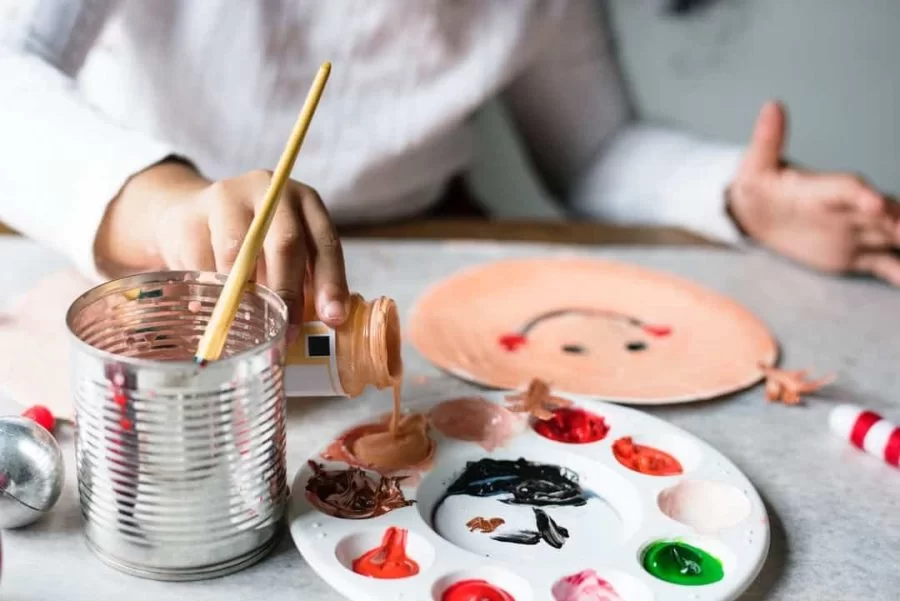
Children love to play pretend. Walk into a children playroom or classroom, and you are likely to see children playing as chefs, doctors, or race car drivers. While this type dramatic play is common among children, it can have a purpose greater than simple entertainment. Five of the most significant benefits of dramatic play are discussed on rasmussen.edu. These five benefits are:
Dramatic play teaches self-regulation
Dramatic play gives children an emotional outlet
Dramatic play teaches conflict resolution
Dramatic play supports literacy
Dramatic play allows children to be supported in their ideas
I think we can all agree that these are benefits we would love our children to gain. And our children can, and do, earn these benefits through dramatic play. The first three benefits on the list are earned because, when playing dramatically, situations arise that require self-regulation. Children are also able to play out what they have seen, which provides an effective emotional outlet. And, disagreements are bound to happen. Thus, they learn how to resolve those disagreements.
Now, the fourth on the list: literacy. This benefit is explained quite well on rasmussen.edu. It says, “Kids who are playing grocery store, for example, will be exposed to text in the form of a shopping list, coupons and a checkout receipt. This gives them a chance to gain firsthand experience with the many ways we use text in everyday life”. Thus, dramatic play provides children with more experiences seeing and using written text. And this only aids in increasing literacy.
Number five on the list is where parents and teachers can play a large role. “Kids process their inner thoughts and emotions externally through dramatic play. That means you can learn a lot about what makes your kids happy, scared or frustrated just through observing their pretend play” (rasmussen.edu). Simply by paying attention and being a part of our children’s dramatic play, we can learn what makes them tick. We can be better parents and teachers by applying what we learn from them and using it to teach, encourage, and care for them.
Building Kidz and Dramatic Play
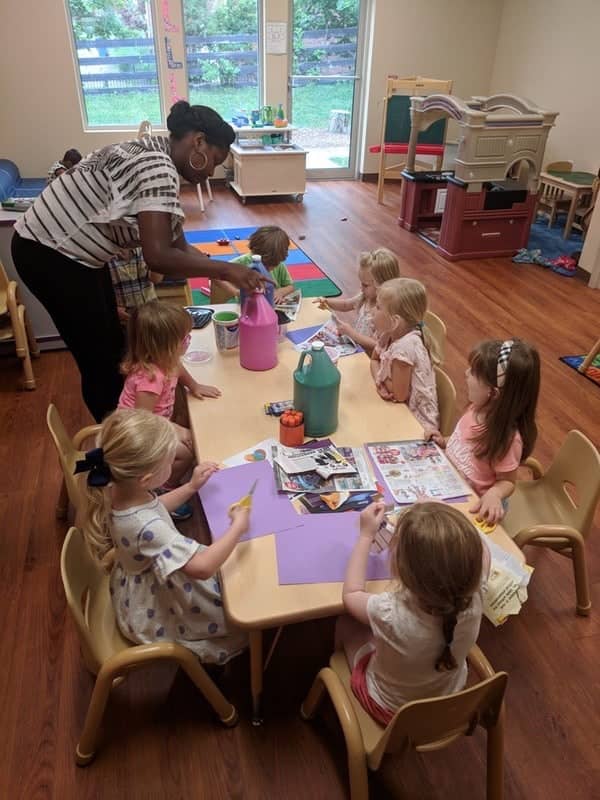
At Building Kidz, we don’t simply encourage dramatic play-it’s built into our curriculum for each and every age group. Whether in the infant or school age room, toddler or pre-k classrooms, each of our children will have toys that encourage dramatic play. During free play time, they are able to interact in dramatic play with their peers. On top of that, the built-in dramatic play is often facilitated by a caring teacher. This teacher guides the dramatic play so that students are able to glean the benefits listed above. If children are having struggles self-regulating, or resolving conflicts, our teachers are there to help. They are able to use dramatic play to help children better understand how to work through these difficult situations.
Each and every day, children at Building Kidz gain the numerous benefits of dramatic play. Benefits that will bring them success now and in the future.
Choosing the right preschool for your child can be difficult, time-consuming, and stressful. It is not a decision to be made lightly or half-heartedly. It takes time and research. Here is a guide to help you with that research.
The first step is to look at location. Is it close to home or work? Or on the way from one to the other? Knowing these factors will narrow down your search.
From there, look at the websites for schools within the right vicinity. The look and feel of a preschool’s website will tell a lot about how well the school is run. If the website site is clean, crisp, and welcoming chances are higher that the school is as well.
Read. Each school’s website should discuss their educational philosophy-the methods they will use to teach and care for your child. One might even discuss its Performing Arts based curriculum. Narrow your search down more by finding schools that you feel will be a good fit for your child.
Take some tours! To me, this is the fun part. Once you have narrowed down your list, go take a tour of each school. The tours will be very telling. You will get a feel for how the school is run from your own perspective not just the images and words online.
A Tour at Building Kidz
In the article “10 Steps to Finding the Right Preschool: A Parent’s Checklist,” the author discusses four signs that a schools is run well. You should keep an eye for these when touring schools. At Building Kidz, we are confident that you will see each of these five when you come in for a tour.
Children have a positive relationship with the staff.
When you come in for a tour at any Building Kidz location, you will see that our staff truly care about the children. The teachers will be working with and helping the children in their classes. Our teachers are active participants in each child’s learning experience.
Quality home-to-school connections.
Parents play a crucial role in each child’s success. Because of this, we have a strong connection with our parents. When you come in for a tour, don’t be surprised to see parent and staff member engaged in conversation about how to best help a child succeed. Look around, and you will important and fun information for parents and family.
Great preschools have structure.
At Building Kidz, we are excited to provide a unique and proven curriculum that uses performing arts to enhance academics. This curriculum provides structure for each child in each classroom. When you come in, look at how engaged children are in what they are doing.
Positive approach to discipline
At Building Kidz, we have a set structure that allows children to know their expectations. We have consistent classroom rules that we combine with lessons that teach children why and how they are expected to behave.
All of us at Building Kidz are proud and excited to run a high quality preschool that will benefit children, families, and communities. Click here to schedule a tour today!
The ability to read and write if often referred to as “literacy”. The question to be asked, though, is this: as parents and educators, what can we do to encourage and increase literacy in our children? To answer that, we first need to understand one fact: “literacy counts from day one” (bizjournals.com).
This idea, that literacy matters from the first day of a child’s life is not a new one. Scientists of been studying how, when, and why children gain these skills. The main aspect that has changed is that they now study how modern technology affects these literacy skills. In the quoted article above, these studies are simply summarized. And this is what it comes down to: “while the amount of talking parents did with their children made a difference, one researcher found that language delivered by television, audio book, Internet, or smartphone didn’t produce the same results as personal interaction, no matter how educational the content.”
This is significant for us parents and educators. We could turn on Little Einsteins everyday for our children, but it will not produce the same literacy outcome as simple personal interactions. And this is something that teachers at Building Kidz provide on a daily basis.
Personal Literacy and Building Kidz
We see our children as just that-children. Each Building Kidz child is unique and a crucial part to the atmosphere of each school. They are not simply a number. Our teachers care for them on an individual level, and thus provide them with meaningful personal interactions throughout the day.
On top of that, our teachers provide all children (infants included) meaningful experiences with the spoken and the written word. The kiddos are read to. They’re given books to hold and to look at. Even if they can’t speak back, teachers talk them, teaching them about this bright new world they are growing up in.
To find your closest Building Kidz location, click here.
For an in depth look at brain development in babies, read this article.
Many children love to dance, even if others might be watching them. They don’t worry whether or not they are doing right. They simply dance for the joy of it. But, in many cases, by the time they reach junior high kids are far less likely to dance in public. While this is not necessarily a negative trend, it does show that dance is not as valued in education as it could, and should, be.
One of the main reasons dance is beneficial in Early Childhood education because dance increases children’s learning skills through kinesthetic problem solving. “When children are presented with an abstract dance problem, they are encouraged to think it through with a kinesthetic solution. This form of learning tends to resonate the strongest with children and the cognitive learning skills that they develop in the dance studio can be carried over into the classroom as they develop their ability to think through abstract problems” (dancebrought2u.com). Learning how to dance teaches children how to think critically and how to solve problems. This directly relates to their skills in the classroom.
Dance at Building Kidz
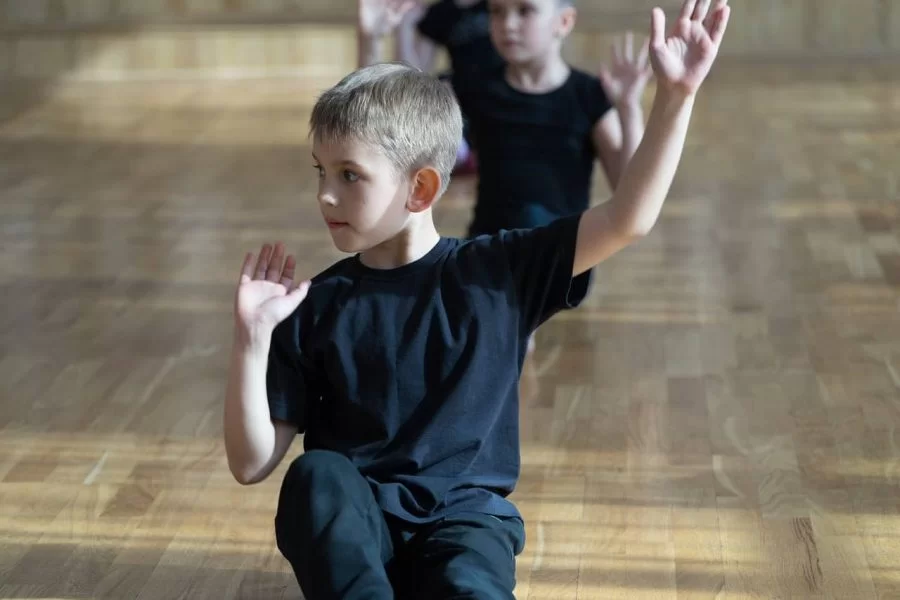
While Building Kidz is a preschool and not a dance studio, we integrate dance into our weekly curriculum. Each week, a qualified dance teacher comes into each classroom and works with the children. Even when the dance teacher is not there, our children are given the opportunity to dance each day. Within our daily activities, dance is used with song to help children understand academic concepts including language and math.
Preschool isn’t childcare. While childcare centers watch young children during the day while their parents are at work, preschool is an early childhood education program for kids between the ages of 3 and 4. Preschool takes breaks for holidays, and it doesn’t continue for the entire year. So why should parents consider preschool over childcare? That’s what we’re here to tell you. Keep reading below to learn about the top 10 benefits of preschool in Chandler, AZ.
1. It’s a Growth Opportunity
Putting your child in preschool gives them the opportunity to grow.
Preschool will teach your child how to follow instructions and share with other children. It will also provide a foundation for learning your child will continue to develop as they make their way through school.
2. It Gives Your Child Structure
Kids need structure.
This structure actually improves children’s brains. How? It helps them make plans into the future, resist their impulses, and modulate their emotions. A child needs these skills to function in their day to day life and succeed in the classroom.
By providing a structured environment, preschool helps your child learn these skills. It also teaches your child how to play with other children and make friends.
But don’t worry. Your child won’t be bogged down with rules. Your child won’t even notice the structure.
3. It Teaches Your Child How to Make Thier Own Choices
As an adult, you make an average of 35,000 decisions every day. Your child may not be there yet, but learning how to make decisions for themselves is an important part of your child’s development.
Preschool can help them learn this skill.
Your child will be presented with several different choices of activities during their days at preschool. They get to choose which activity they want to do on their own.
If your child doesn’t know what to do, a teacher will encourage them and help them find something that interests them.
4. It Teaches Your Child How to Take Care of Themselves and Help Others
As your child learns how to take care of themselves, their sense of self-worth will continue to grow. But the image of their self-worth also relates to helping others.
Children want to engage with other people, teachers and children alike.
Preschool teachers give your child this opportunity. They may allow your child to help set up the classroom for snack time, feed the class pet, or clean up the toys after playtime.
Your child’s teacher will also show them how to take care of themselves. They’ll do this by teaching your child how to put their personal items in their cubby or wash their hands before snack.
Preschool also promotes peer learning. A child who knows where the coloring pages are supposed to go might help a new child put the pages away. This allows the children to help each other.
5. It Answers Your Child’s Questions
Most 4-year-olds ask close to 300 questions a day. Most of these questions reference the world directly around them. Preschool gives your child an outlet to learn the answers to some of those questions.
But preschool won’t just give your child answers point blank.
Instead, it teaches your child how to discover answers through exploration and experimentation. If they’re still struggling to find answers on their own, they can learn what they want to know by starting a conversation with one of the teachers.
This will encourage learning and make your job as a parent just a little bit easier.
6. It Improves Motor Skills
Preschool-aged kids are still developing fine and gross motor skills.
That’s why preschool provides children with activities that will challenge them and promote their physical coordination. These activities might include running, climbing, cutting paper, threading a necklace with beads.
Activities like these will help your child improve their hand-eye coordination, which will also improve their balance.
7. It Encourages Emotional and Social Development
When they’re at preschool, your child learns how to develop relationships with other adults and children outside the family. Because the teachers will form a nurturing and caring relationship with each child, your child will develop their emotional and social skills.
In fact, children this age learn their emotional and social skills directly through experiences.
The teachers at preschool will turn emotional moments into teachable ones. If your child gets frustrated or angry, the teacher won’t just step in to resolve the problem. They’ll show your child how to work through the problem. They’ll also teach your child how negative behavior can hurt the people around them and how to choose positive behavior instead.
8. It Boosts Language Skills
Between the ages of 3 and 5, your child’s vocabulary will take a massive leap forward. Instead of 900 words, they’ll know over 2,500 words. They’ll start forming longer sentences that are more complex.
But your child will only make this improvement if they’re in a language-rich environment.
That’s what preschool provides.
The teachers will help grow your child’s vocabulary by asking new questions. They’ll also introduce the kids to new words during activities. Talking is a large part of many preschool programs. Your child will have the opportunity to talk to other children and teachers, act out stories, sing songs, and more.
9. It Develops Math and Reading Skills
Children want to learn math and reading skills. Why? Because those are some of the skills most families value.
Preschool develops your child’s pre-math and early reading skills. And this doesn’t just include the alphabet or basic counting. Preschool provides many other activities that’ll improve kids math and reading.
For example, the teachers might teach your child rhymes that help them learn distinct word sounds. Reading stories improves their listening skills and comprehension.
When it comes to math, your child might play counting games, sorting games, or other puzzle games. Even just putting a normal puzzle together will help your child problem solve and recognize patterns.
10. It Prepares Your Child for School
Preschool teaches your child the skills they need to succeed in kindergarten.
Not only does preschool give your child a foundation of learning, it also shows them how to get along with others, pay attention, listen to instructions, and helps them develop socially and emotionally.
By the time kindergarten rolls around, they’ll be ready to start learning.